Table of contents
- Whose name is on the LESCO bill?
- Reference number vs owner name
- How tenants can check the LESCO bill
- How tenants can pay the bill
- Splitting one LESCO bill between portions
- Before you move in
- When you move out
- Common tenant problems and how to handle them
- The bottom line
- Frequently asked questions
- Can a tenant check the LESCO bill?
- Can a tenant pay the LESCO bill in the owner's name?
- How do tenants split one LESCO bill between portions?
- What should a tenant do when moving out?
- Who is responsible for LESCO bill arrears in a rented house?
Renting a house or a portion? Then the LESCO bill for tenants raises questions owners rarely think about: can you check a bill that is in someone else’s name, how do you pay it, how do you share one bill between portions, and what should you do when you move in or out? This guide answers each one in plain language.
We are an independent guide, not affiliated with LESCO or any government body. Rules about connection ownership and name changes are set by LESCO, so for those we point you to lesco.gov.pk and your subdivision office.
Whose name is on the LESCO bill?
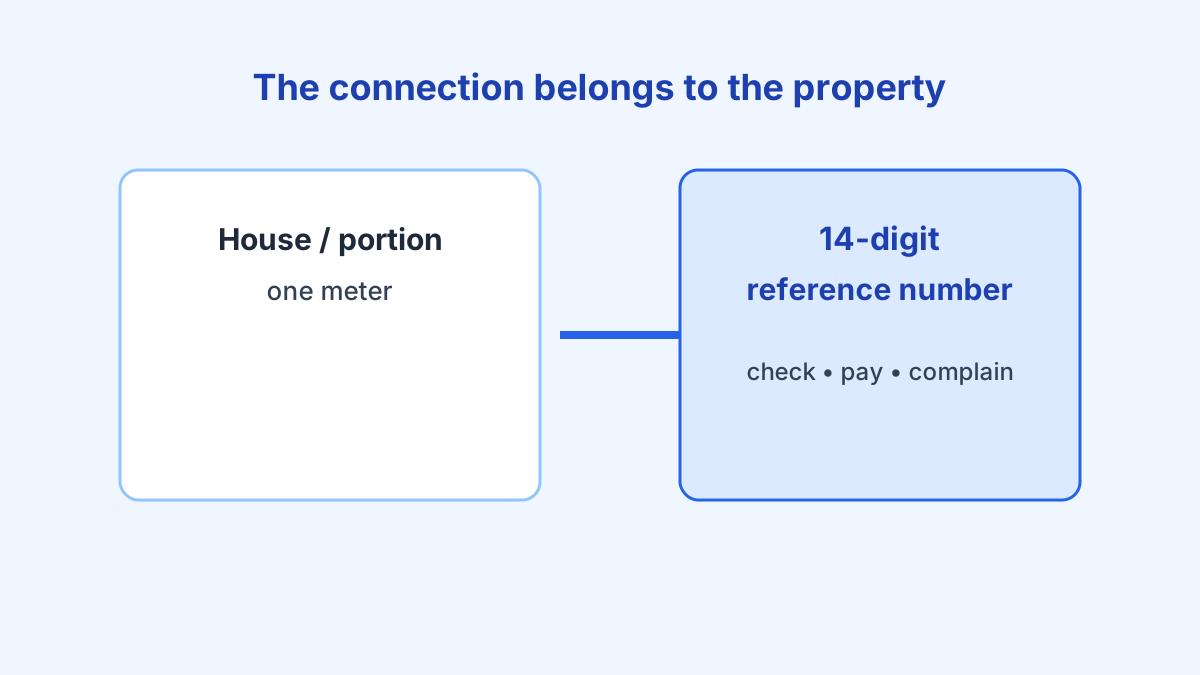
In most rented homes the bill carries the name of the property owner or whoever applied for the connection, sometimes years ago. That is normal. The connection belongs to the property, and the name on the bill does not stop a tenant from checking or paying it.
What really identifies the connection is the 14-digit reference number. Every check and payment channel uses it. Our reference number guide shows exactly where it is printed on the bill.
Reference number vs owner name
Think of it this way: the owner name tells you who the connection is registered to, while the reference number tells LESCO which meter and which account a bill or payment belongs to. For a tenant, the reference number is what matters day to day.
- You can view the bill with the reference number alone.
- You can pay with the reference number alone.
- Complaints about supply or billing are also registered against the reference number.
Changing the name on the connection is a separate process handled by LESCO and normally involves the owner. If that is ever needed, check lesco.gov.pk or ask your subdivision office for the current requirements.
How tenants can check the LESCO bill
As a tenant you do not need to wait for the paper bill, which may go to the owner or get lost at a shared gate. Use any of these:
- Online: enter the reference number in the bill check box on our homepage to open the official bill.
- Duplicate bill: download and print a LESCO duplicate bill if the paper copy is missing.
- SMS: send the reference number to 8118 to receive bill details on your phone.
How tenants can pay the bill
Payments are credited by reference number, so a tenant can pay through any normal channel: a bank branch, a bank app, an ATM bill-payment menu, or a mobile wallet such as JazzCash or Easypaisa. See our payment methods guide for each option.
Always keep the receipt or transaction ID and share a copy with the owner. If there is ever a dispute about whether a month was paid, those receipts settle it. You can also check whether the bill shows as paid online.
Splitting one LESCO bill between portions
Many houses in Lahore are divided into upper and lower portions that share a single LESCO meter. Splitting that bill fairly is one of the most common sources of tenant disputes.
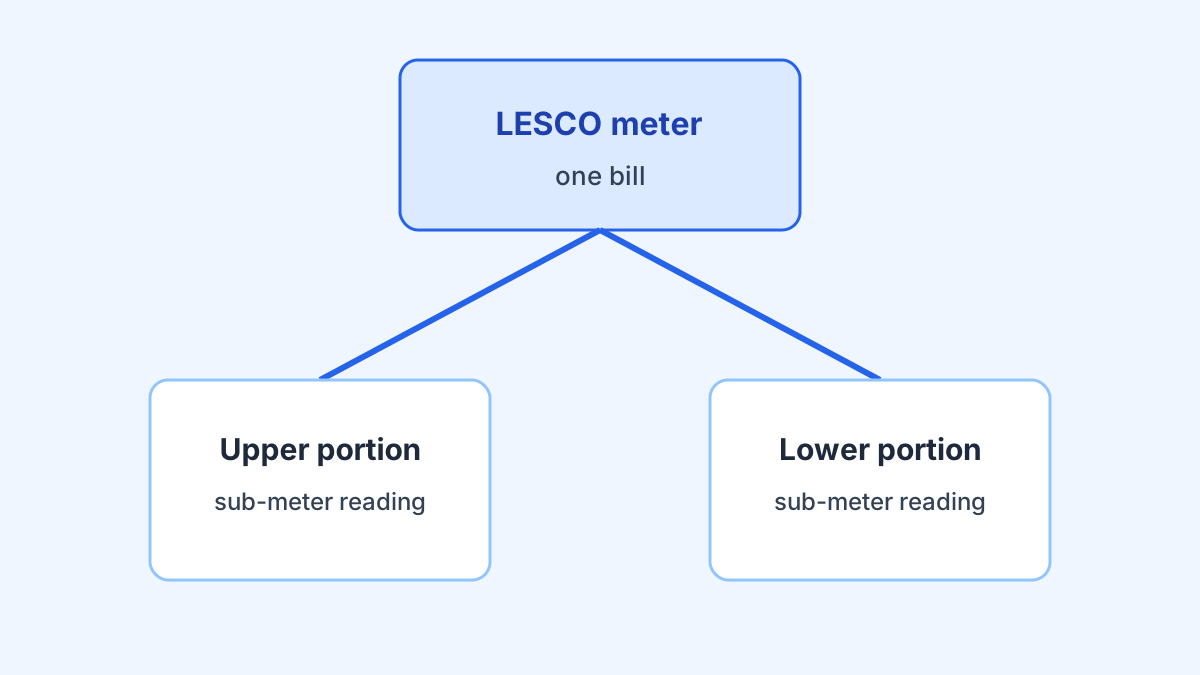
Practical options include:
- Sub-meters: a private sub-meter for each portion lets you split the units each month by actual use. Note both sub-meter readings on the same day the LESCO meter is read.
- Agreed ratio: some families agree a fixed share, for example by number of rooms or air conditioners. Write it down in the rental agreement.
- Separate connections: the cleanest long-term answer is a separate LESCO connection for each portion. That is applied for through LESCO; see our new connection guide.
Remember that taxes and charges are calculated on the total bill, and higher total units can push the whole bill into a more expensive slab. A split based purely on units can therefore feel unfair to the lighter user. Agree the method before the first bill arrives.
Before you move in
- Ask the owner for the reference number and a recent bill.
- Check the latest bill for arrears. Old unpaid amounts stay on the connection, so agree in writing that they are the owner’s responsibility.
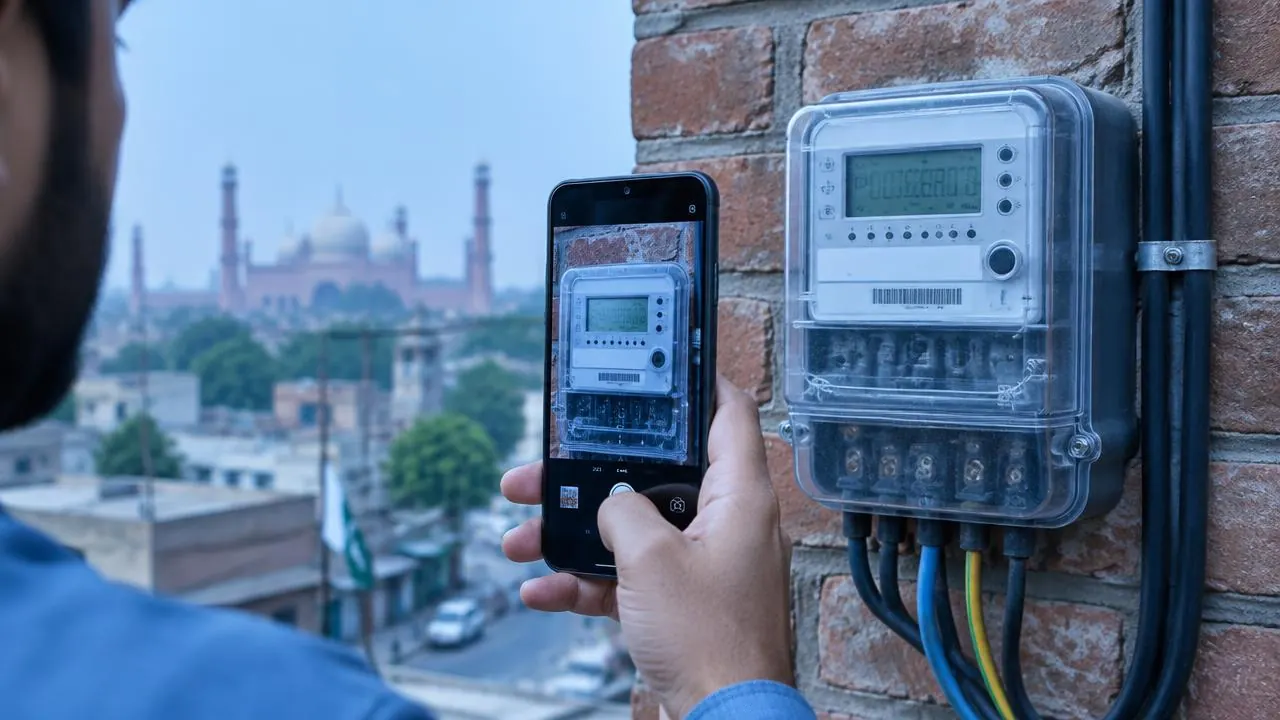
- Take a dated photo of the meter reading on the day you move in.
- Agree in writing how the bill will be split if portions share a meter.
When you move out
- Take a dated photo of the final meter reading.
- Agree with the owner how to settle units used after the last bill’s reading date.
- Pay or settle your share and keep all receipts.
- Hand back any bill copies and confirm nothing is outstanding.
If you are unsure how to read the meter, our guide on how to read a LESCO meter walks you through it.
Common tenant problems and how to handle them
- The bill never reaches you. Paper bills are often delivered to the main gate or the owner. Check it online each month instead of waiting for paper.
- The bill seems too high. Compare the present reading on the bill with the meter. If the reading is wrong, a complaint can be registered against the reference number, even by a tenant.
- Supply is cut or faulty. Outages and faults can be reported on the helpline: 118 for outages and 0800-00118 for billing questions.
- The owner holds old arrears. Old unpaid amounts stay on the connection. Raise it with the owner before paying, so your payments are not used to clear someone else’s dues without agreement.
- Two families, one bill. Write down the split method and the reading dates, and share each month’s bill and receipt with everyone involved.
Most disputes between tenants and owners come down to missing records. A shared photo of the meter, the bill and the receipt each month prevents almost all of them.
The bottom line
For tenants, the reference number is the key to the LESCO bill: it lets you check, print and pay a bill that is in the owner’s name. Agree the split and the arrears in writing, photograph the meter when you move in and out, and keep every receipt.
Frequently asked questions
Can a tenant check the LESCO bill?
Yes. Anyone with the 14-digit reference number can view the bill online, print a duplicate or check it by SMS. You do not need to be the person named on the bill.
Can a tenant pay the LESCO bill in the owner's name?
Yes. Payments are linked to the reference number, not to the payer, so a tenant can pay through a bank, mobile wallet or online channel and the payment is credited to that connection.
How do tenants split one LESCO bill between portions?
If portions share one meter, agree a split in writing, ideally based on sub-meter readings for each portion. A separate LESCO connection for each portion is the cleanest long-term solution.
What should a tenant do when moving out?
Take a dated photo of the meter reading, pay up to the final reading as agreed with the owner, and keep all payment receipts as proof.
Who is responsible for LESCO bill arrears in a rented house?
The connection belongs to the property, so arrears stay on the connection. Your rental agreement should say who pays what; check the bill for arrears before you move in.
Comments
Discussion is coming soon. Subscribe to be notified when comments go live.