Table of contents
- What is the quarterly tariff adjustment?
- Why QTA appears as a separate line
- QTA vs FPA: what is the difference?
- Where to find QTA on your LESCO bill
- How the adjustment affects your total bill
- Can you avoid the quarterly tariff adjustment?
- Reading the adjustment lines with confidence
- The bottom line
- Frequently asked questions
- What is the quarterly tariff adjustment on a LESCO bill?
- How is QTA different from FPA?
- Where can I find the quarterly tariff adjustment on my bill?
- Why does the quarterly adjustment change from bill to bill?
- Can LESCO remove the quarterly tariff adjustment from my bill?
If you look closely at the charges section of your bill, you may see a line that is neither your energy charge nor the fuel adjustment. That is often the quarterly tariff adjustment LESCO customers see on their bills, usually shortened to QTA. This guide explains what it is, why it appears separately, how it differs from the fuel price adjustment, and where to find it on your bill.
This is an independent explainer. We are not affiliated with LESCO, NEPRA or any government body. We explain the concept only; we do not quote rates, because they are set by the regulator and change. For the current figure, check lesco.gov.pk or the latest notification.
What is the quarterly tariff adjustment?
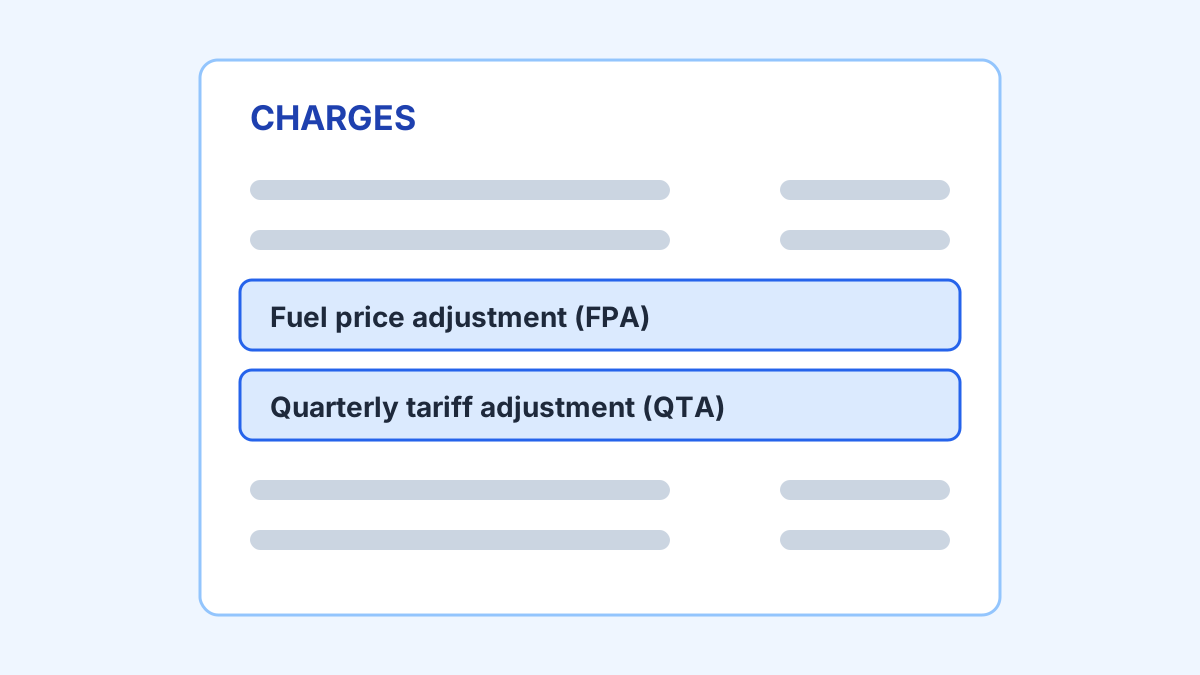
Electricity tariffs in Pakistan are set in advance based on expected costs. During the year, some of those costs turn out different from what was assumed. Instead of rewriting the base tariff every time, the regulator approves an adjustment for a quarter, and distribution companies such as LESCO apply it to bills for that period.
In simple terms, QTA is a correction. When approved costs for the quarter are higher than assumed, the adjustment is added to bills. When they are lower, it can reduce bills. Because it is tied to a quarter, the same adjustment generally applies across several monthly bills and then changes when the next quarter’s figure is notified.
Why QTA appears as a separate line
You might wonder why the adjustment is not simply built into your per-unit rate. Keeping it separate has a practical reason: the base tariff stays stable and easy to compare, while the temporary adjustment can be switched on, changed or removed each quarter without rewriting the whole tariff table.
For you as a customer, it means two things. First, your bill can change even if your units and your slab stay exactly the same. Second, the separate line makes it possible to see how much of your bill is the base tariff and how much is an adjustment. Our guide to LESCO bill taxes and charges shows how all these lines add up.
QTA vs FPA: what is the difference?
The quarterly tariff adjustment is often confused with the fuel price adjustment (FPA). They are related ideas but not the same charge.
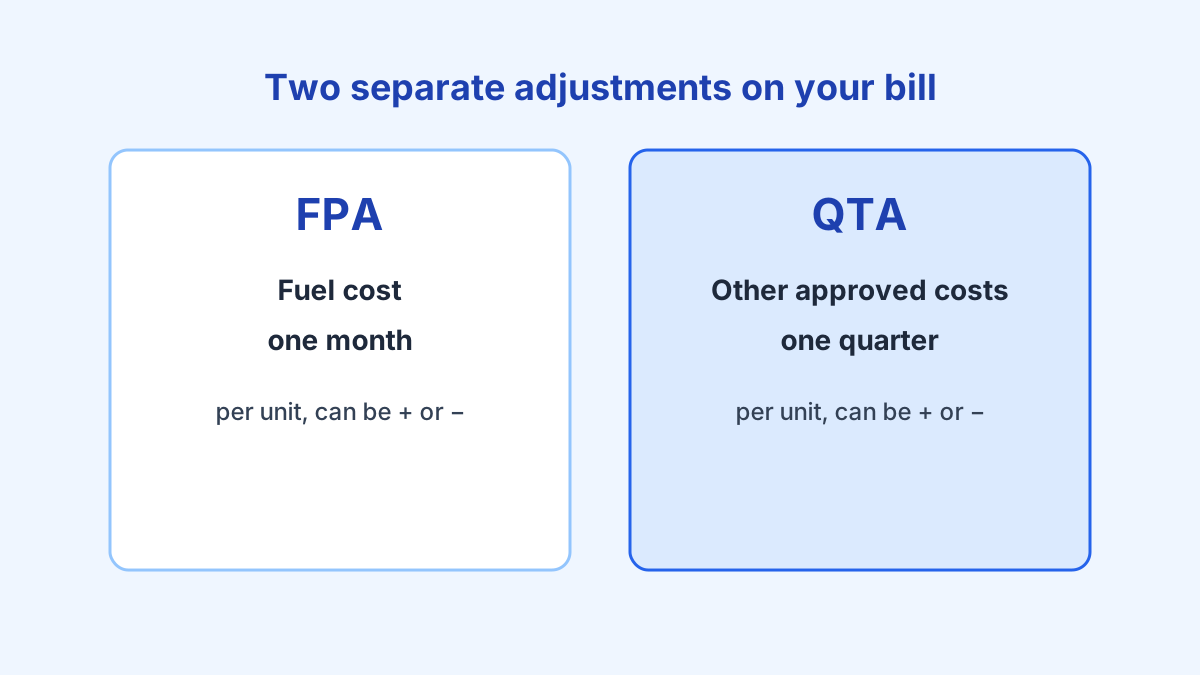
- FPA reflects the difference between expected and actual fuel cost of generating electricity for a particular month. It usually appears on a bill a couple of months after the month it relates to.
- QTA reflects other approved cost changes over a quarter, such as changes in capacity costs or other components of the tariff.
- Both are calculated per unit, both appear as separate lines, and both can be positive or negative.
For a full explanation of the fuel adjustment, read our FPA charges guide.
Where to find QTA on your LESCO bill
The quarterly adjustment sits in the charges section of your bill, usually close to the FPA and other per-unit adjustments. Bills often use short labels rather than full names, so look for an abbreviation that refers to a quarterly or tariff adjustment. If you are reading your bill online, the same section appears on the online copy.
If you cannot spot it, compare two consecutive bills: lines that change while your units stay similar are usually adjustments. If you have lost your bill, download a duplicate copy to check the charges.
How the adjustment affects your total bill
Because QTA is charged per unit, the more units you use, the larger the adjustment in rupees. Taxes such as GST are calculated on the electricity cost, so an adjustment can also slightly change the tax on top of it. That is why the same number of units can produce a different total from one quarter to the next.
The LESCO bill calculator helps you estimate your bill from units, slabs and the main adjustments, so you can see roughly how much of the change comes from usage and how much from charges.
Can you avoid the quarterly tariff adjustment?
No customer can opt out of QTA; it is an approved, regulated charge applied to all relevant consumers. What you can control is the number of units it is applied to. Using fewer units, especially during peak hours if you are on time-of-use billing, lowers both the energy charge and every per-unit adjustment on top of it.
If you believe the adjustment was applied to the wrong number of units, the issue is the units, not the adjustment. Check your meter reading against the bill and register a billing complaint if needed.
Reading the adjustment lines with confidence
Adjustment lines can make a bill look complicated, but you only need to ask three questions about each one. First, what period does it relate to: a single month, as with FPA, or a quarter, as with QTA? Second, is it charged per unit? If so, its rupee amount grows with your units. Third, is it an addition or a reduction this time? Adjustments can be negative, so a line does not always mean you are paying more.
When you compare bills from different months, separate the effect of your own usage from the effect of adjustments. If your units went up, most of the change is usually your consumption. If your units stayed flat but the total changed, look at the adjustment lines and the taxes calculated on them. Keeping your last few bills, or downloading them online, makes this comparison quick.
Finally, remember that adjustments are announced by the regulator, not decided by your local office. Staff at the subdivision can explain how a line was applied to your bill, but they cannot change the approved rate. For the latest notified figures, check lesco.gov.pk.
The bottom line
The quarterly tariff adjustment is a regulated, per-unit correction applied for a quarter at a time, shown as its own line on your LESCO bill. It is different from the monthly fuel price adjustment, and its rate is set by the regulator. For the current figure, check lesco.gov.pk; to lower its impact, reduce your units.
Frequently asked questions
What is the quarterly tariff adjustment on a LESCO bill?
It is an adjustment applied for a quarter to bring the base electricity tariff in line with costs that changed since the tariff was set. It appears as its own line on the bill rather than being built into the per-unit rate.
How is QTA different from FPA?
FPA (fuel price adjustment) reflects changes in fuel cost for a specific month. QTA reflects other approved cost changes over a quarter. Both are separate lines on the bill and both can go up or down.
Where can I find the quarterly tariff adjustment on my bill?
Look in the charges section of your bill, near the FPA and the other per-unit adjustments. It is usually shown as a short label rather than the full name.
Why does the quarterly adjustment change from bill to bill?
Because it is set for a quarter at a time and can be revised. The rate for your bill is decided by the regulator; check lesco.gov.pk for the current notification.
Can LESCO remove the quarterly tariff adjustment from my bill?
No. It is an approved, regulated charge. If you think it was calculated on the wrong number of units, raise a billing complaint about the units.
Comments
Discussion is coming soon. Subscribe to be notified when comments go live.