Table of contents
- What Is an Inverter AC?
- What Is a Non-Inverter AC?
- Which AC Saves More Electricity?
- Inverter AC Bill Difference
- 1.5 Ton Inverter AC Units Per Hour
- 1.5 Ton Non-Inverter AC Units Per Hour
- AC Electricity Bill Pakistan Comparison
- AC Electricity Cost Comparison
- Inverter AC Benefits Pakistan
- Non-Inverter AC Bill Cost
- Best AC for Low Electricity Bill
- Tips to Reduce AC Electricity Usage
- Final Words
Many people in Pakistan get confused when buying a new AC. The biggest question is: inverter AC vs non inverter AC, which one saves more electricity and gives a lower bill?
Electricity prices in Pakistan are already very high, so choosing the right AC is important for monthly savings. In this guide, we will explain the difference in very easy words.
What Is an Inverter AC?
An inverter AC controls its compressor speed automatically. It does not turn fully off again and again.
This helps in better cooling and lower electricity usage.
Because of this technology, inverter AC electricity saving is much better compared to normal ACs.
What Is a Non-Inverter AC?
A non-inverter AC works differently. Its compressor only has two modes:
- Fully ON
- Fully OFF
When room temperature changes, the compressor starts again with full power. This increases non inverter AC electricity usage and makes the bill higher.
Which AC Saves More Electricity?
The simple answer is: inverter AC.
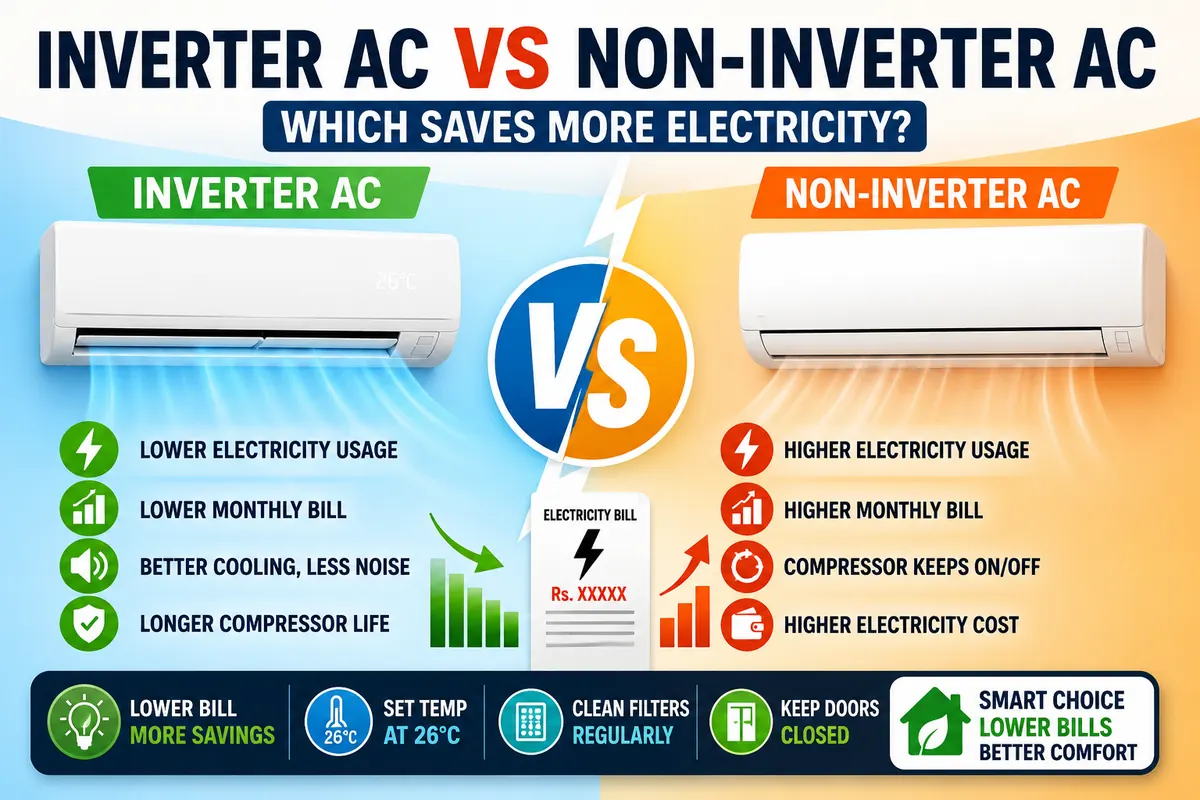
If you are searching for which AC saves more electricity, inverter AC is the better option for most Pakistani homes.
It uses electricity more smartly and reduces extra power usage.
Inverter AC Bill Difference
There is a clear inverter AC bill difference compared to non-inverter models.
An inverter AC can save around 30% to 50% electricity depending on usage, room size, and temperature settings.
This means lower monthly electricity bills.
1.5 Ton Inverter AC Units Per Hour
A normal 1.5 ton inverter AC units per hour usage is usually lower after the room becomes cool.
Approximate usage:
- Around 1 to 1.5 units per hour
- Sometimes even lower after stable cooling
This depends on temperature, weather, and AC brand.
1.5 Ton Non-Inverter AC Units Per Hour
A 1.5 ton non inverter AC units per hour usage is usually higher because the compressor keeps restarting.
Approximate usage:
- Around 1.8 to 2.5 units per hour
This increases monthly bills quickly, especially in summer.
AC Electricity Bill Pakistan Comparison
In Pakistan, electricity bills become very high during summer due to AC usage.
When comparing AC electricity bill Pakistan users often notice inverter AC users pay less monthly bills than non-inverter users.
AC Electricity Cost Comparison
Here is a simple AC electricity cost comparison:
| AC Type | Electricity Usage | Monthly Bill |
|---|---|---|
| Inverter AC | Lower | Lower |
| Non-Inverter AC | Higher | Higher |
This is why many people now prefer inverter models.
Inverter AC Benefits Pakistan
There are many inverter AC benefits Pakistan users can enjoy:
- Lower electricity bill
- Better cooling
- Less noise
- Longer compressor life
- Stable room temperature
These benefits make inverter AC a smart long-term choice.
Non-Inverter AC Bill Cost
The main problem with non inverter AC bill cost is high electricity consumption.
If you use it daily for many hours, your bill can increase very fast during hot weather.
Best AC for Low Electricity Bill
If your goal is the best AC for low electricity bill, inverter AC is usually the best option.
Although inverter AC costs more at purchase time, it helps save money every month.
Tips to Reduce AC Electricity Usage
Here are simple tips to lower AC power consumption Pakistan homes can follow:
- Set AC temperature to 26°C
- Keep doors closed
- Clean AC filters regularly
- Use inverter AC if possible
- Avoid direct sunlight in rooms
Final Words
Now you can better understand the difference between inverter AC vs non inverter AC.
For most homes in Pakistan, inverter AC is the better choice for electricity saving and lower monthly bills. It may cost more at first, but it helps save money in the long run.
Comments
Discussion is coming soon. Subscribe to be notified when comments go live.